Hip Osteoarthritis
Degenerative cartilage loss in the acetabulofemoral joint producing groin pain, stiffness, and progressive functional impairment.
Overview
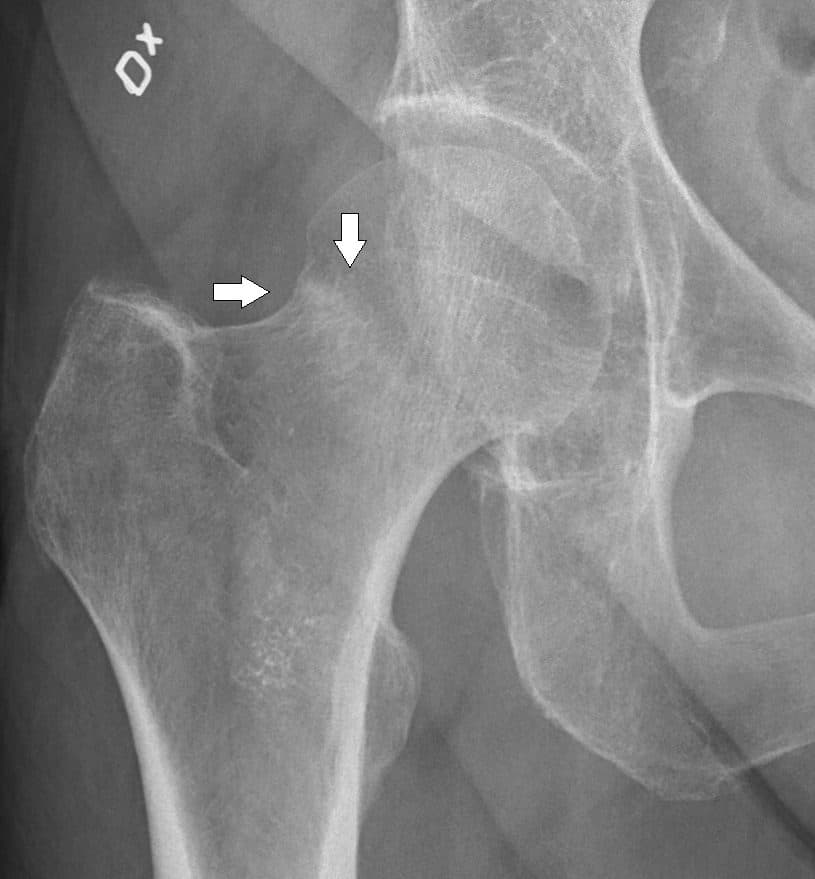
Hip osteoarthritis is the end result of a spectrum of mechanical, metabolic, and inflammatory insults to the joint. Primary disease is idiopathic; secondary causes include dysplasia, femoroacetabular impingement, avascular necrosis, trauma, and inflammatory arthropathy. The hip is the second most commonly replaced large joint worldwide.
Epidemiology
Symptomatic hip OA affects around 10 percent of adults over 55 in Northern Europe, with higher radiographic rates. Total hip arthroplasty incidence in high-income registries exceeds 200 per 100,000 per year. Age, obesity, occupational loading, and prior hip disease are leading risk factors.
Symptoms
Groin pain that radiates to the anterior thigh and knee is the cardinal symptom. Patients describe stiffness after rest, difficulty putting on shoes and socks, and an antalgic or Trendelenburg gait. Internal rotation in flexion is lost early and is a reliable examination finding.