Avascular Necrosis of the Femoral Head
Ischaemic death of subchondral bone in the femoral head leading to collapse, secondary arthritis, and a disproportionate burden in young adults.
Overview
Osteonecrosis of the femoral head results from disruption of the tenuous blood supply to the subchondral bone, leading to osteocyte death, structural weakening, and eventual subchondral collapse. It is a disease of younger adults (mean age 35-50) and a significant cause of hip replacement in this group.
Epidemiology
An estimated 10,000 to 20,000 new cases are diagnosed annually in the United States. Risk factors include corticosteroid use, excess alcohol, trauma, sickle cell disease, HIV treatment, Gaucher disease, decompression sickness, and autoimmune disease. Bilateral involvement occurs in up to 80 percent.
Symptoms
Insidious groin pain worsening with weight bearing is typical. Pain at rest and mechanical symptoms suggest subchondral collapse. Examination shows restricted and painful hip motion, particularly in internal rotation.
Imaging
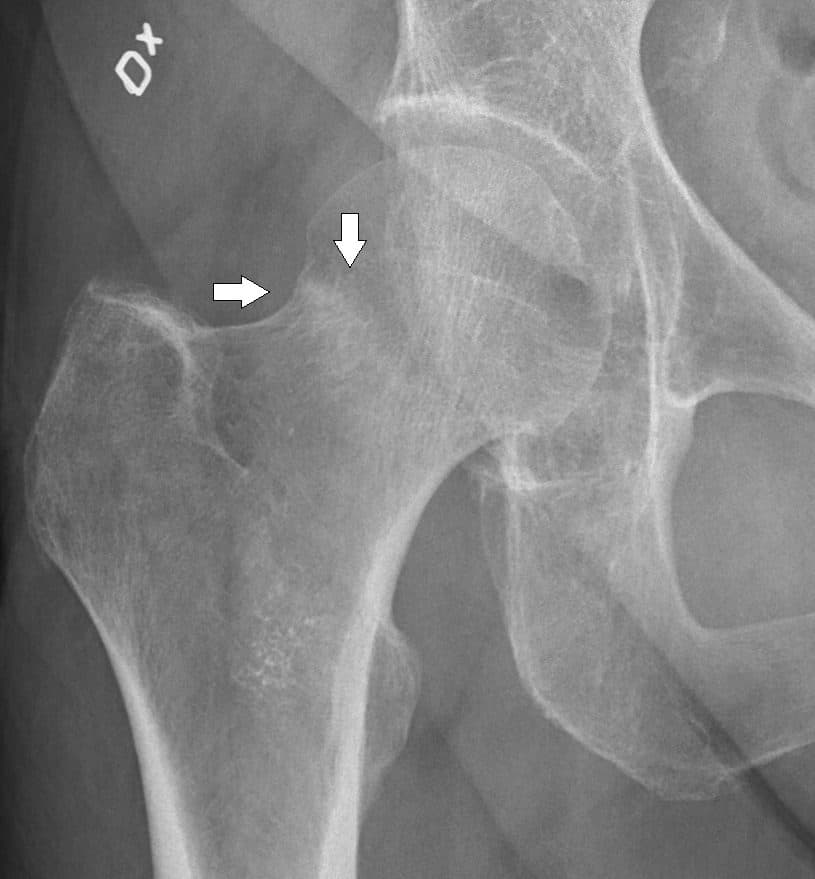
Plain radiographs are often normal early; later features include subchondral sclerosis, the pathognomonic crescent sign of subchondral fracture, and eventual femoral head collapse. MRI is the gold standard for early detection, demonstrating the characteristic serpiginous low-signal band and bone marrow oedema.