Femoroacetabular Impingement
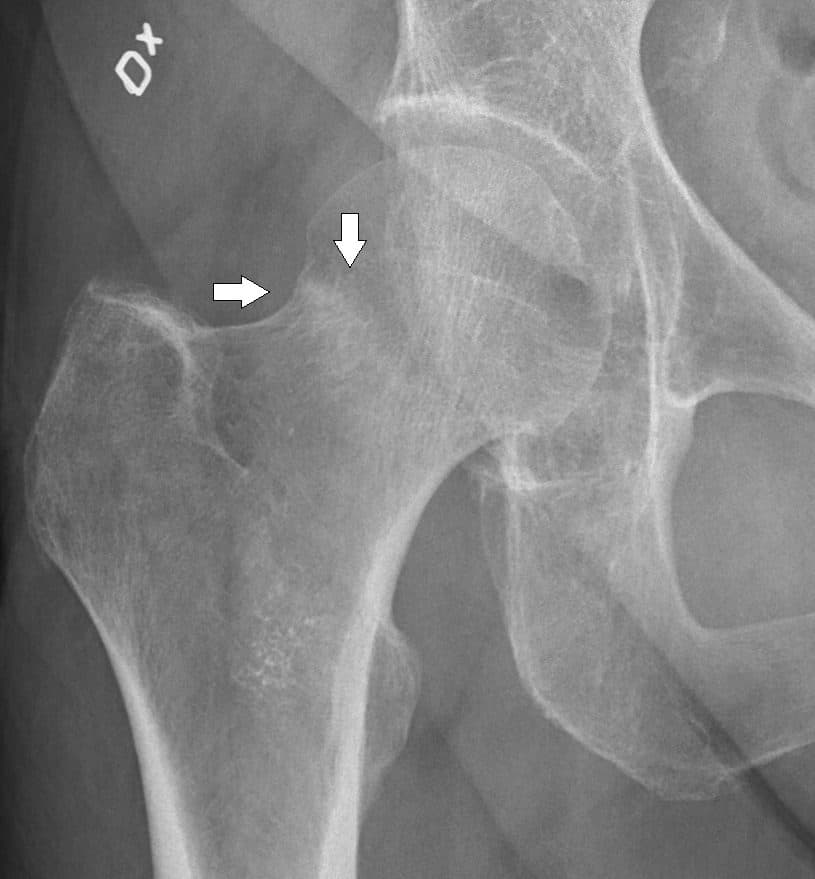
Abnormal morphological contact between the proximal femur and acetabular rim during hip motion, implicated as a precursor of premature osteoarthritis.
Overview
Femoroacetabular impingement (FAI) syndrome describes painful hip motion resulting from abnormal morphology of the femoral head-neck junction (cam), the acetabular rim (pincer), or both. Repetitive impingement causes labral tears and chondral delamination, particularly in the anterosuperior quadrant of the acetabulum, and is increasingly recognised as a cause of early-onset hip osteoarthritis.
Epidemiology
Cam morphology is present in up to a quarter of asymptomatic young adults and is more common in males and athletes whose hips undergo high loads during skeletal maturation (football, ice hockey). Pincer morphology is more common in females. Symptomatic FAI presents most often between ages 20 and 40.
Symptoms
Activity-related groin pain, a clicking or catching sensation, and difficulty with deep flexion activities (sitting, squatting, tying shoelaces) are typical. The anterior impingement test (flexion-adduction-internal rotation) reproduces symptoms in most cases but is not specific.