ShoulderPatient education
Proximal Humerus Fractures
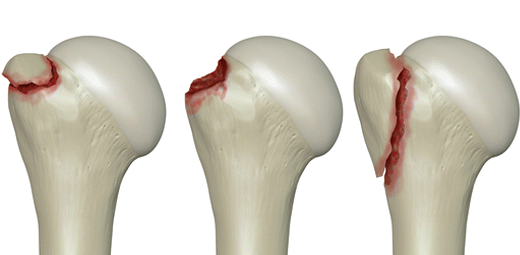
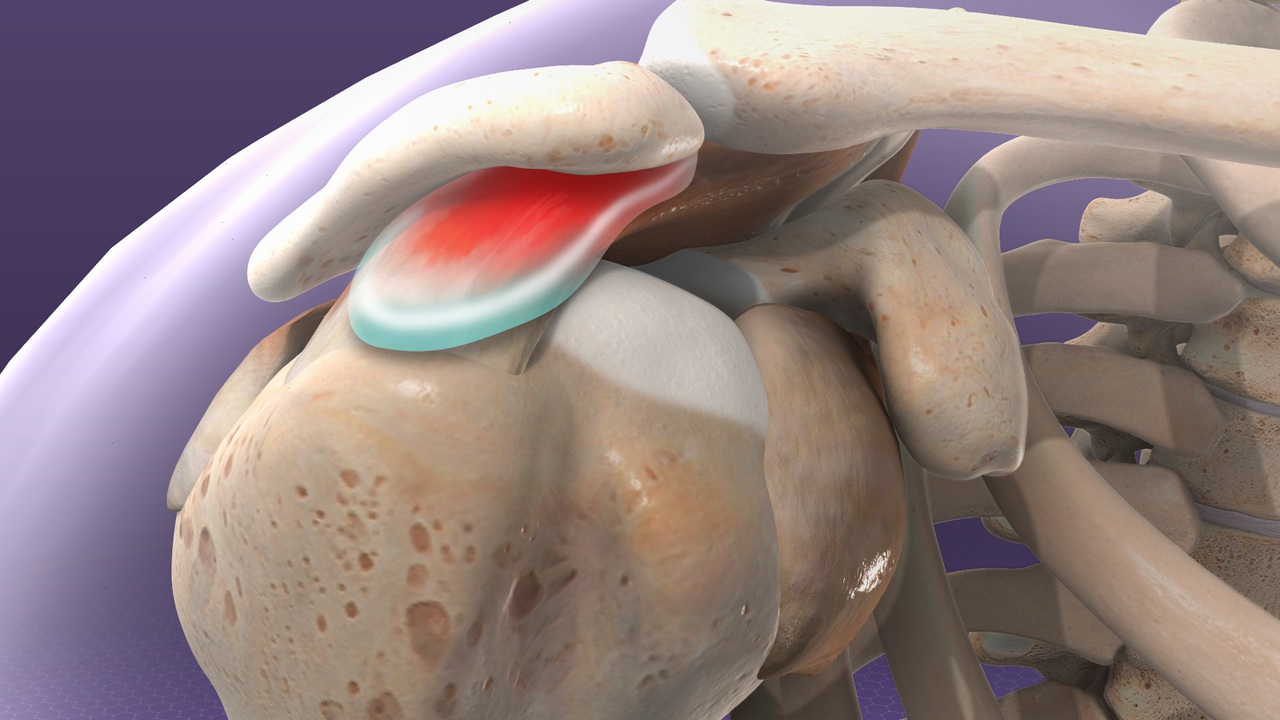
Proximal humerus fractures are breaks in the upper part of the arm bone near the shoulder. They are common in young people with high-energy injuries and older adults with low-energy falls.
Published
18 July 2024
Reading time
2 min
Words
364
Sections
3
Overview:
Proximal humerus fractures are breaks in the upper part of the arm bone near the shoulder. They are common in young people with high-energy injuries and older adults with low-energy falls.What is the Proximal Humerus?
The proximal humerus is the upper section of the arm bone that connects to the shoulder joint.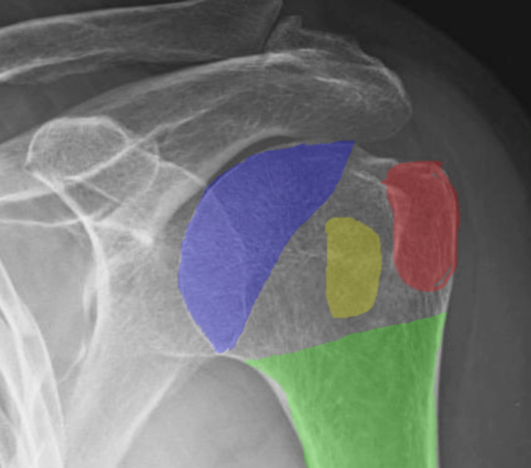
Causes of Proximal Humerus Fractures:
- High-Energy Trauma:'Car accidents, sports injuries, or falls from height (more common in young people).
- Low-Energy Falls:'Simple falls, often due to osteoporosis (more common in older adults).
Symptoms:
- Pain:'Severe pain at the shoulder.
- Swelling and Bruising:'Visible swelling and discoloration around the shoulder.
- Limited Movement:'Difficulty moving the arm.
Diagnosing Proximal Humerus Fractures:
- Physical Examination:'Checking for pain, swelling, and deformity.
- Imaging:
- X-rays:'Standard views to assess the fracture.
- CT Scans:'Detailed images for complex fractures.
Types of Fractures:
- Neer Classification:'Based on the number of fracture parts and their displacement.
- AO Classification:'Detailed classification considering the fracture pattern.
Treatment Options:
- Non-Surgical Management:
- Suitable for minimally displaced and stable fractures.
- Pain Management:'Medications to control pain.
- Immobilisation:'Using a sling to support the arm.
- Rehabilitation:'Gradual exercises to restore movement and strength.
- Surgical Management:
- Needed for displaced or unstable fractures.
- ORIF (Open Reduction and Internal Fixation):'Aligning and fixing the bones with plates and screws.
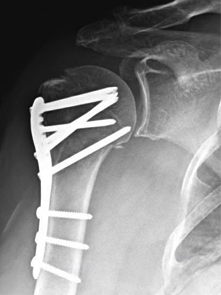
- Intramedullary Nailing (IM):Inserting a rod into the bone to stabilize the fracture.
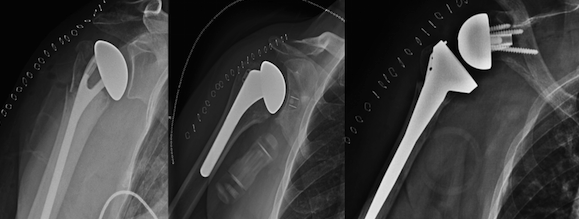
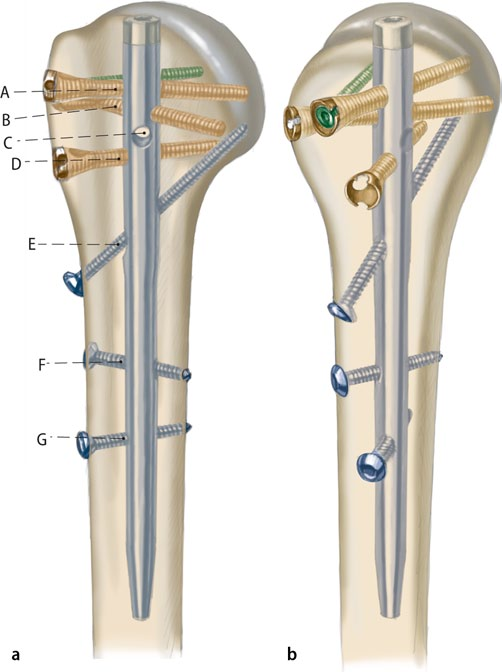 Arthroplasty:'Joint replacement surgery for severe fractures
Post-Operative Rehabilitation:
Arthroplasty:'Joint replacement surgery for severe fractures
Post-Operative Rehabilitation:
- Initial Immobilization:'Using a sling.
- Gradual Exercises:'Starting with gentle movements and progressing to strengthening exercises.
- Full Recovery:'Typically within 12 weeks.
- Non-Union:'Bone fails to heal.
- Malunion:'Bone heals incorrectly.
- Infection:'Risk after surgery.
- Hardware Issues:'Problems with surgical implants.
- Accurate diagnosis and imaging are essential.
- Non-surgical treatment works for less severe fractures.
- Surgery is necessary for more complex fractures.
- Understanding the injury helps in choosing the right treatment.
- Post-operative rehabilitation and follow-up are vital for recovery and preventing complications.
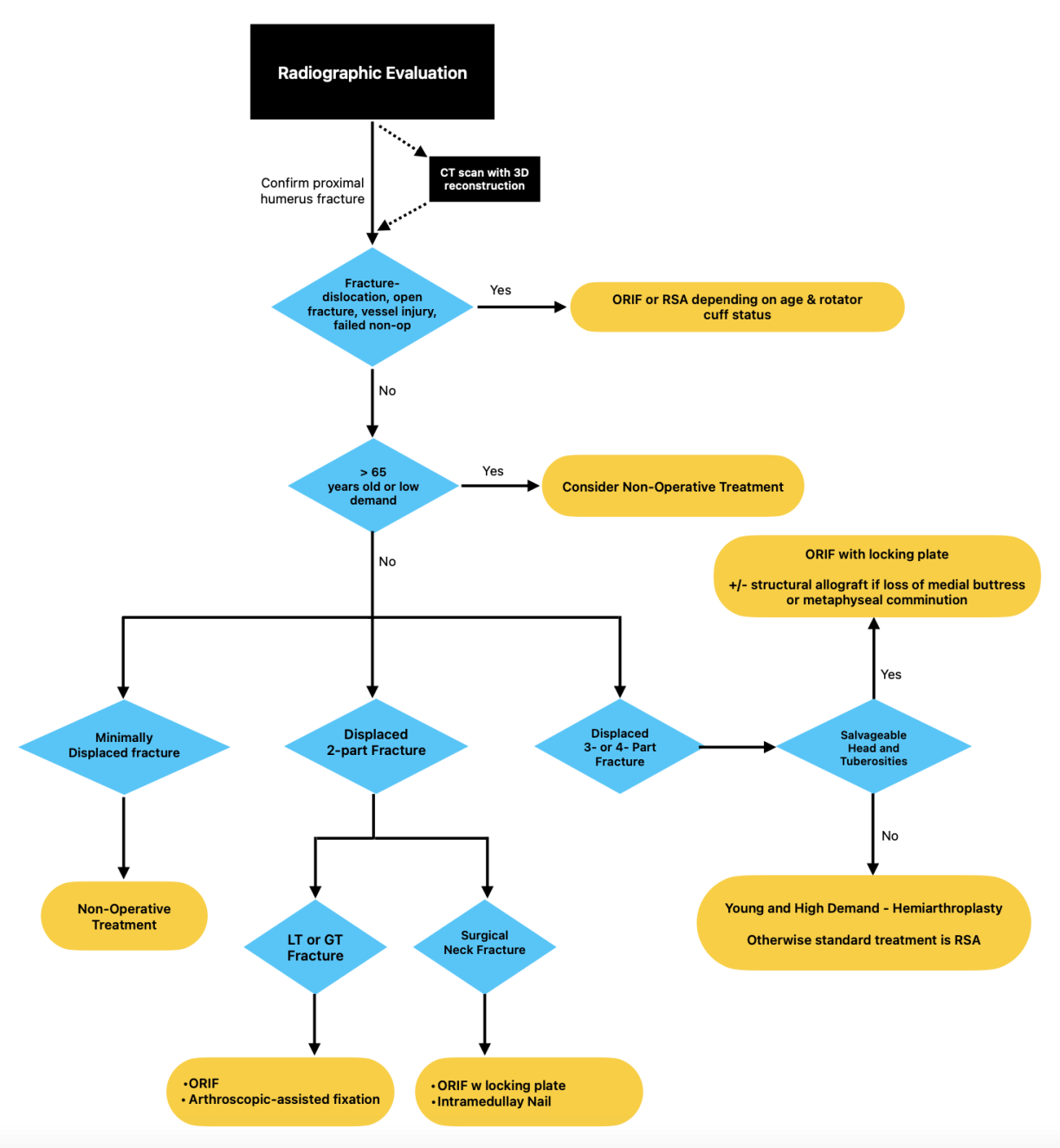 Proposed treatment algorithm for management of proximal humerus fracture. GT = greater tuberosity, LT = lesser tuberosity, ORIF = open reduction and internal fixation, CT: computed tomography; RSA = reverse shoulder arthroplasty.
'
Proposed treatment algorithm for management of proximal humerus fracture. GT = greater tuberosity, LT = lesser tuberosity, ORIF = open reduction and internal fixation, CT: computed tomography; RSA = reverse shoulder arthroplasty.
'Keep reading