ShoulderPatient education
Distal Clavicle Osteolysis
Struggling with pain at the top of your shoulder? Distal Clavicle Osteolysis (DCO) is a treatable condition that affects the end of your collarbone at the acromioclavicular (AC) joint. Often linked to repetitive gym training or overhead sports, it can cause persistent discomfort…
Published
29 July 2025
Reading time
3 min
Words
784
Sections
10

Struggling with pain at the top of your shoulder?
Distal Clavicle Osteolysis (DCO) is a treatable condition that affects the end of your collarbone at the acromioclavicular (AC) joint. Often linked to repetitive gym training or overhead sports, it can cause persistent discomfort during lifts or certain movements. With early diagnosis and structured care, full recovery is expected for most patients.What Is Distal Clavicle Osteolysis?
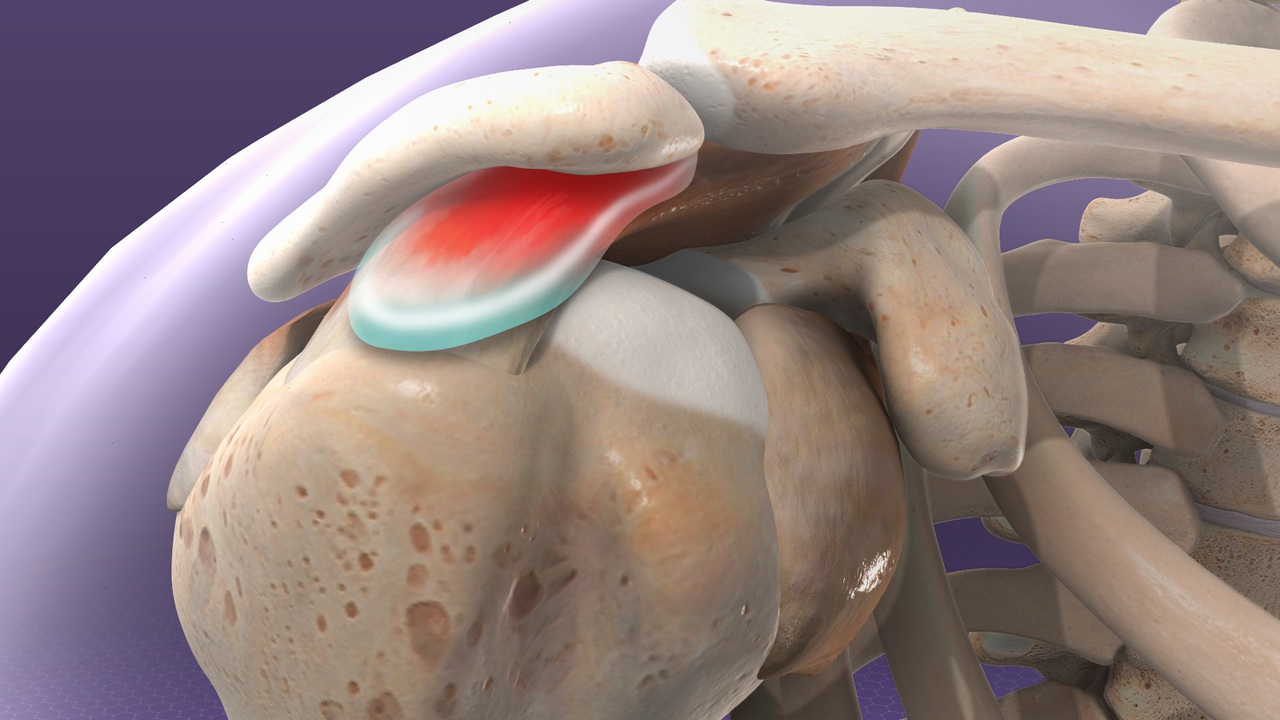
Distal Clavicle Osteolysis (DCO) occurs when the end of the collarbone (clavicle) gradually erodes where it meets the shoulder blade. This joint is known as the'acromioclavicular (AC) joint. DCO leads to pain and inflammation in this area, commonly seen in people who lift weights or play sports involving repetitive overhead actions. There are two types:- Atraumatic DCO'' develops gradually through repeated strain (e.g. bench press, overhead sports).
- Traumatic DCO'' triggered by a one-off injury such as an AC-joint sprain.
Common Causes and Risk Factors
Factors that increase the risk of developing DCO include:- Repetitive upper body load:'Bench pressing, dips, push-ups, or heavy lifting
- Overhead activities:'Volleyball, swimming, basketball, tennis
- Prior injuries:'Especially AC-joint separation
- Intensive training:'High frequency or heavy resistance (e.g. lifting >1.5 ' body weight)
- Other contributors:'Poor technique, fast progression in training, smoking (slows bone healing)
Symptoms to Look Out For
- Dull or sharp pain over the top of the shoulder (AC joint)
- Pain made worse by pressing exercises or overhead movement
- Tenderness when touching the end of the collarbone
- Discomfort when lying on the affected shoulder
- Pain at extremes of motion, especially when reaching across the body
Diagnosing Distal Clavicle Osteolysis
A healthcare professional will start with a physical examination. Diagnosis is confirmed using:- X-rays (Zanca view):'May show bone changes but often normal early on
- MRI scan:'Identifies early bone damage and inflammation
- Ultrasound or bone scan:'Helpful when MRI is unavailable
- Diagnostic injection:'Local anaesthetic into the joint'temporary relief confirms the source
Treatment Options
Non-Surgical (Conservative) Care ' First Line Most patients recover well without surgery. Initial treatment includes:- Activity adjustment:'Modify pressing technique and reduce load
- Pain relief:'Anti-inflammatories and ice
- Joint injection:'Corticosteroids for short-term pain control
- Targeted physiotherapy:
- Phase 1:'Exercises below shoulder height (e.g. wall push-ups)
- Phase 2:'Progress to above shoulder level
- Phase 3:'Core and shoulder stability drills
Surgical Treatment ' If Needed
Surgery may be advised if symptoms persist despite 3 months of conservative care.- Distal Clavicle Excision (Mumford Procedure):
- Performed via keyhole surgery (arthroscopy)
- Small portion (no more than 8 mm) of the collarbone is removed
- Recovery is quick, with return to light activity in 3 weeks and full lifting after 12 weeks
Recovery and Risks
Outlook:
- Most return to full sports or gym activity after treatment
- Long-term outcomes are excellent with proper management
Possible Complications:
- Recurrent pain if training is resumed too early
- Joint widening or early arthritis on scans
- After surgery: small risk of stiffness, infection, or bone overgrowth
Preventing DCO
- Use correct lifting technique'keep bench press grip narrower than 1.5 ' shoulder width
- Increase weights gradually and take rest weeks
- Include pulling and lower body exercises to balance training
- Overhead athletes should cross-train with lower shoulder strain activities
- Avoid smoking and maintain bone health through good diet and vitamin D
Key Points for Patients
- Pain at the AC joint after lifting? DCO is a common and treatable cause
- MRI is often more useful than X-ray early on
- Adjusting your training is crucial for recovery
- Surgery is rarely needed if conservative treatment is followed properly
- A team approach leads to the best outcomes