HipPatient education
Understanding Hip Arthroscopy: A Guide to Minimally Invasive Hip Surgery
Hip arthroscopy is a minimally invasive surgical procedure that allows orthopedic surgeons to examine and treat problems within the hip joint using small incisions
Published
15 July 2024
Reading time
2 min
Words
476
Sections
6
Hip arthroscopy is a minimally invasive surgical procedure that allows orthopedic surgeons to examine and treat problems within the hip joint using small incisions. This technique employs an arthroscope, a small camera inserted into the joint, which projects images onto a video monitor. These images guide the surgeon in using delicate instruments to address various hip conditions.
The use of small incisions instead of larger ones, as required in open surgery, typically results in less pain, reduced joint stiffness, and a faster recovery time. Though hip arthroscopy has been practiced for many years, it is not as frequently performed as knee or shoulder arthroscopy.
Anatomy of the Hip:
The hip functions as a ball-and-socket joint, where the acetabulum of the pelvis forms the socket and the femoral head of the thighbone serves as the ball. Articular cartilage, a smooth, slippery tissue, covers the surfaces of these bones, ensuring they glide effortlessly against each other. The acetabulum is further supported by the labrum, a strong fibrocartilage ring that deepens the socket and enhances joint stability. Ligaments surround the joint, forming a capsule lined with synovium, a membrane that produces lubricating synovial fluid.When Is Hip Arthroscopy Recommended?
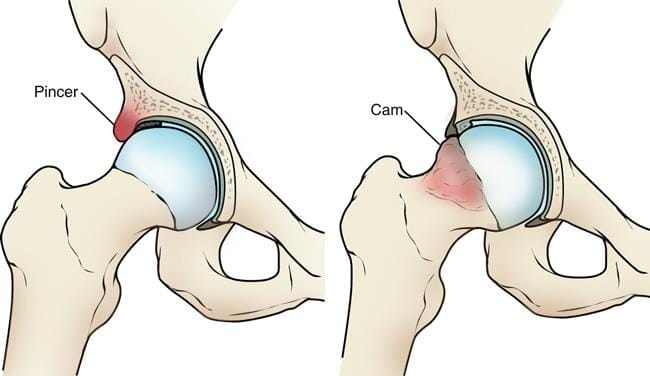
Doctors may suggest hip arthroscopy for patients experiencing persistent hip pain unresponsive to non-surgical treatments like rest, physical therapy, and medications. This procedure can alleviate symptoms caused by:- Femoroacetabular Impingement (FAI): Extra bone growth on the acetabulum or femoral head that can damage the hip's soft tissues.
- Hip Labrum Tears.
- Dysplasia: A shallow hip socket that increases stress on the labrum.
- Snapping Hip Syndromes: Tendon issues causing snapping or popping sensations.
- Synovitis: Inflammation of the hip joint lining.
- Loose Bodies: Fragments of bone or cartilage in the joint.
- Hip Joint Infections.
- Tendon Injuries: Issues with the hamstrings or gluteal muscles.
- Sciatic Nerve Compression: Often from hip or hamstring abnormalities.