TraumaPatient education
Simplifying the complex: complex bone fractures explained
The average person has two�fractures�during their lifetime. A bone fracture occurs when the bone is weaker than the physical force exerted on it
Published
4 June 2024
Reading time
4 min
Words
985
Sections
10
What is a complex bone fracture?
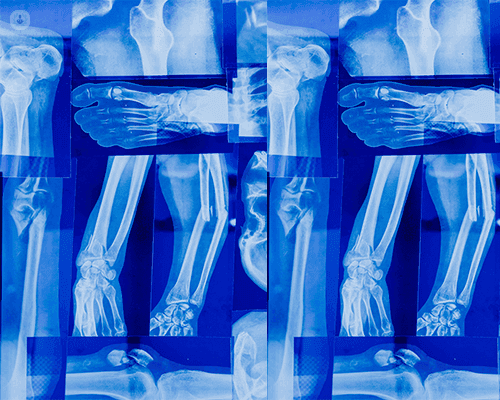
The average person has two'fractures'during their lifetime. A bone fracture occurs when the bone is weaker than the physical force exerted on it. The fracture might be regarded as complex when it'involves'a joint or if it is shattered bone. Depending on the force of the break will usually determine the severity of the fracture. If the breaking point of the bone has only slightly been exceeded, it may crack as opposed to breaking all the way through. However, if the force is extreme, for example, the force from an automobile crash, then the bone may shatter. If the bone fracture is broken in a way that bone fragments are sticking out through the skin or a wound is penetrating down into the broken bone, then the fracture is referred to as an'open fracture. Open fractures can be devastating injuries that have the potential for infection, non-union, nerve or vessel injury, and'long-term debilitating dysfunction'of the limb.What are the most common causes of bone fractures?
The most common causes of fractures are:- Trauma'' a fall, motor vehicle accident, abuse, or'tackle during a football game'can all result in fractures.
- Osteoporosis'' this disorder weakens bones and makes them more likely to break.
- Overuse'' repetitive motion can tire muscles and place more force on bone. This can result in stress fractures. Stress fractures of the hand, ankle, tibia, or hip are more common in athletes, for example, caused by running.
What are the different types of bone fracture?
Different types of fracture include:- Closed (simple) fracture'' the broken bone has not pierced the skin.
- Open (compound) fracture'' the broken bone juts out through the skin, or a wound leads to the fracture site. Infection and external bleeding are more likely.
- Complicated fracture'' structures surrounding the fracture are injured. There could be damage to veins, arteries, or nerves, as well as possible injury to the lining of the bone (periosteum).
- Comminuted fracture'' the bone is shattered into small pieces. This type tends to heal slower.
- Avulsion fracture'' muscles are anchored to the bone with tendons, a type of connective tissue. The tendon can be wrenched free and pull-out pieces of bone from a powerful muscle contraction. It is more common in knee and shoulder joints.
- Compression fracture'' occurs when two bones are forced against each other. The vertebrae bones in the spine may have this kind of fracture. Older people, particularly those with osteoporosis, are at higher risk.
- Displaced fracture'' broken bone snaps so far out of place where two ends no longer line up straight. This fracture is more difficult to treat with immobilisation alone, and usually, surgery is required.
What are the most common bone fractures?
In the body, there are'206 bones, all with the potential to break in one way or another. It is no surprise that many people experience some type of bone fracture within their lifetime, as there is a vast array of accidents waiting to happen ' for example,'vehicle collisions,'slips, falls, and other unfortunate incidents.Clavicle (collarbone)
The collarbone, otherwise known as the clavicle, is the most commonly broken bone, thanks in large part to where it's positioned. Sporting events and car accidents are the most common causes of collarbone breaks. A sling to prevent the shoulder and the arm from moving is how these are mostly treated, but in some breaks, the pieces of bone move too far out of place and need to be realigned.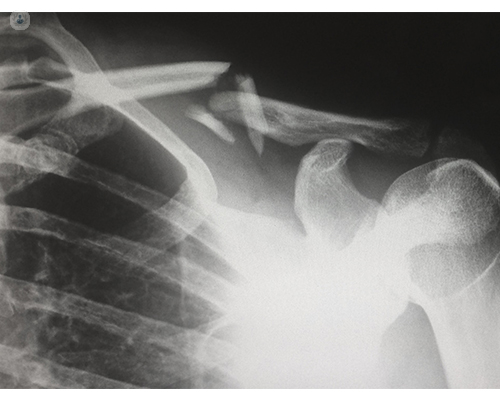 X-ray image of fracture clavicle.