KneePatient education
Understanding Thigh Muscle Strains: Causes, Risks, and Recovery
The hamstrings and quadriceps are particularly susceptible to strains because they span across both the hip and knee joints.
Published
12 November 2024
Reading time
5 min
Words
1,021
Sections
7
Muscle strains, often referred to as pulls or tears, are among the most frequent injuries experienced, particularly by individuals involved in sports or high-impact physical activities.
The thigh contains three primary muscle groups:
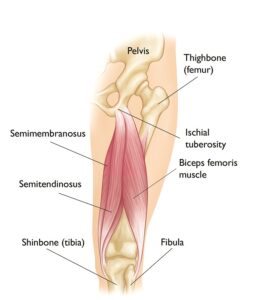
- Hamstring muscles located at the back of the thigh
- Quadriceps muscles situated at the front of the thigh
- Adductor muscles found along the inner thigh
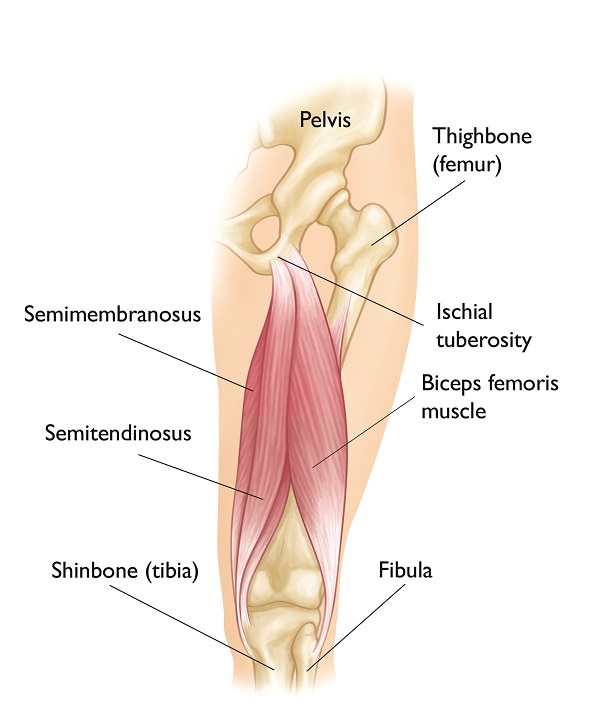
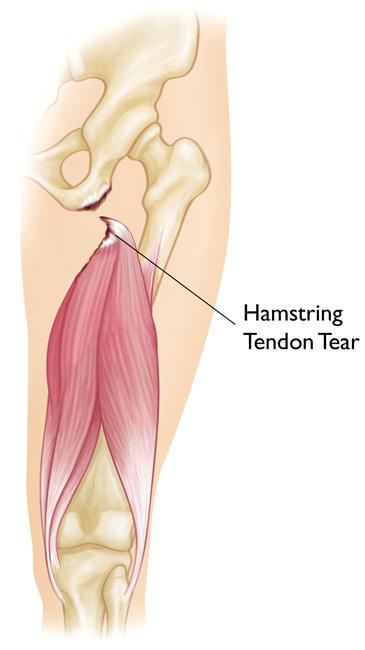
Hamstring muscles on the back of the thigh.
Quadriceps muscles on the front of the thigh.
Symptoms of a Thigh Muscle Strain
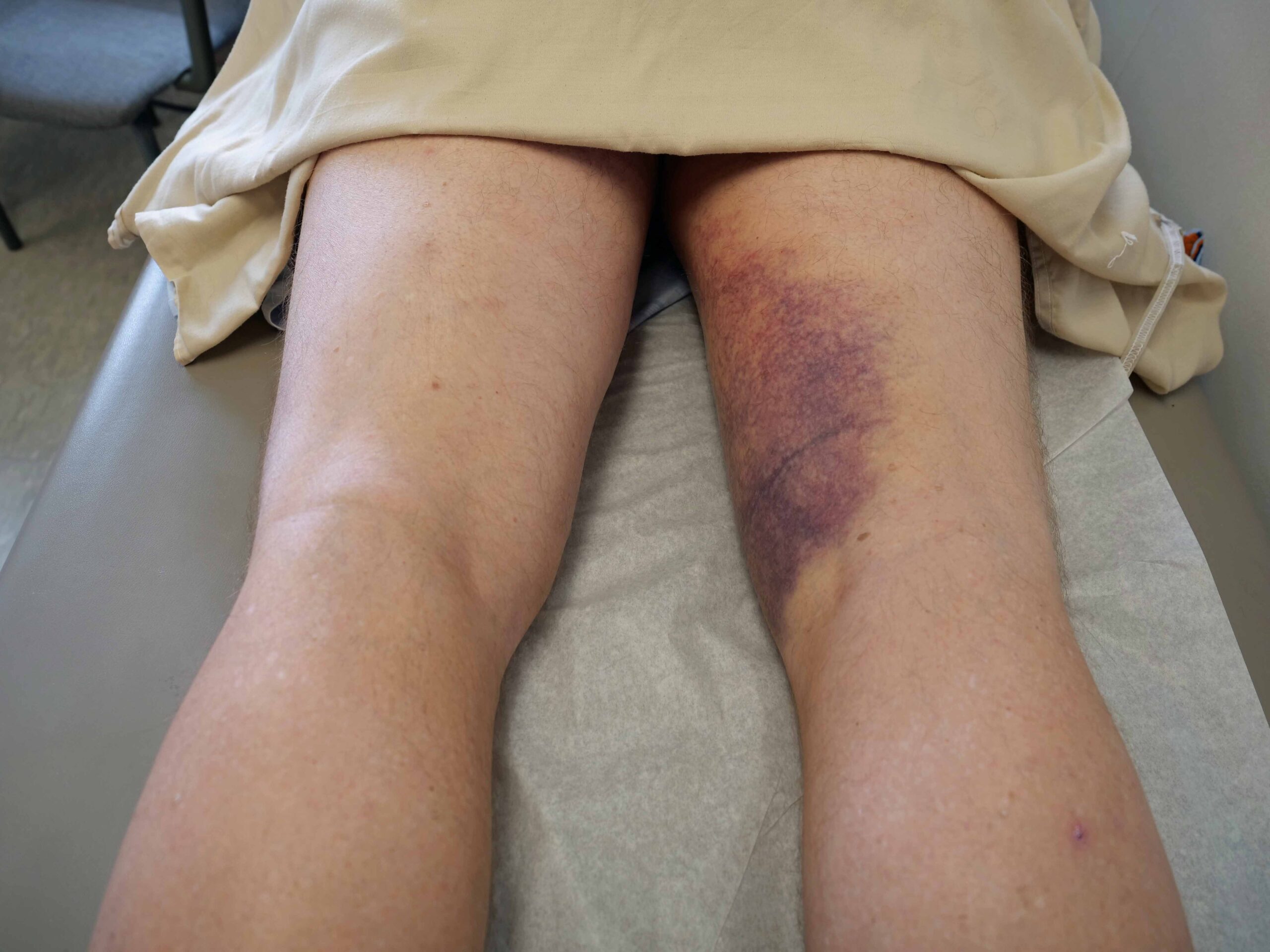
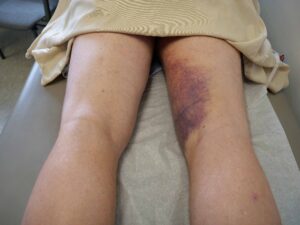
Individuals with a thigh muscle strain often report a distinctive popping or snapping sensation at the moment of injury, which signifies a tearing of the muscle fibers. The pain typically occurs suddenly and can range from moderate to severe, depending on the extent of the injury. The affected area may feel tender to the touch, and if blood vessels are damaged, visible bruising may appear. In some cases, swelling and discoloration (ecchymosis) can extend beyond the thigh, reaching the calf or ankle, sometimes manifesting one or two days after the initial injury.
A torn hamstring muscle has caused a large area of ecchymosis (bruising) in the back of this patient's thigh.
Diagnosis and Medical Evaluation for Thigh Muscle Strains
During a medical consultation, your doctor will carefully review the circumstances of your injury and perform a physical examination of your thigh. They will check for tenderness, swelling, or bruising and may ask you to bend or straighten your knee and hip to assess the extent of the damage and confirm the diagnosis. To rule out potential complications such as fractures or other bone injuries, your doctor may recommend an X-ray. Additionally, a magnetic resonance imaging (MRI) scan might be ordered to obtain a detailed view of the affected muscles and tendons. Thigh muscle strains are categorized into three grades based on their severity:- Grade 1 (Mild): Minor muscle fiber damage that usually heals quickly.
- Grade 2 (Moderate): Partial muscle tear, requiring a longer recovery period.
- Grade 3 (Severe): A complete muscle tear, which can take several months to heal and may require more intensive treatment.
Effective Treatment Strategies for Thigh Muscle Strains
Most thigh muscle strains respond well to the RICE protocol, which consists of the following steps:- Rest: Refrain from activities that caused the strain to allow the muscle to heal. Your doctor may advise using crutches to minimize weight-bearing on the injured leg.
- Ice: Apply a cold pack for 20 minutes at a time, several times daily. Be sure to use a barrier, such as a cloth, to prevent direct contact between the ice and your skin.
- Compression: Gently wrap the injured area with a soft bandage or elastic wrap to limit swelling. Avoid wrapping too tightly.
- Elevation: Keep the injured leg elevated above heart level to reduce swelling and encourage blood flow.
Reducing the Risk of Thigh Muscle Strains
Risk Factors
Certain factors can make you more susceptible to muscle strains, including:- Muscle tightness: Tight muscles are less flexible and more prone to tearing. Regular stretching is essential, particularly for athletes.
- Muscle imbalance: Uneven strength between the quadriceps and hamstrings can increase the risk of strain, as the weaker muscle becomes more vulnerable.
- Poor conditioning: Weak or underdeveloped muscles are less equipped to handle physical stress, raising the likelihood of injury.
- Muscle fatigue: Tired muscles lose their ability to absorb shock effectively, making them more prone to strain.
Preventative Measures to Avoid Muscle Strains
To minimize your chances of experiencing a muscle strain, follow these precautions:- Condition Regularly: Engage in a well-rounded exercise program tailored to your age and activity level. Consult your physician for recommendations.
- Warm Up Before Exercise: Warming up prepares your muscles for intense activity by increasing blood flow, raising muscle temperature, and improving flexibility.
- Cool Down Post-Exercise: After exercising, perform slow, controlled stretches to allow your muscles to relax and improve flexibility.
- Allow Adequate Recovery: If you sustain a strain, rest until your muscle strength and flexibility return to normal levels. Recovery time can range from 10 days to 3 weeks for mild strains, and up to 6 months for severe strains like hamstring tears.