Understanding Snapping Hip Syndrome: Causes, Symptoms, and Potential Complications
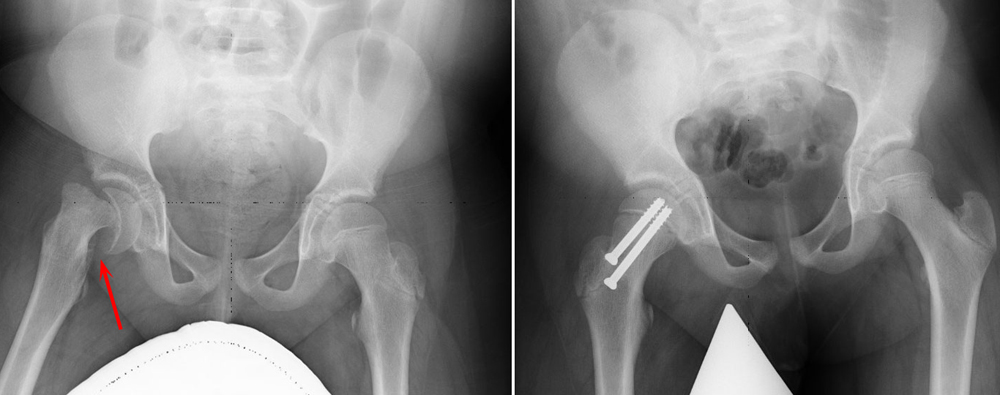
Although snapping hip typically does not show abnormalities on X-rays, your doctor may recommend imaging tests to rule out other issues involving the bones or joint
Anatomy
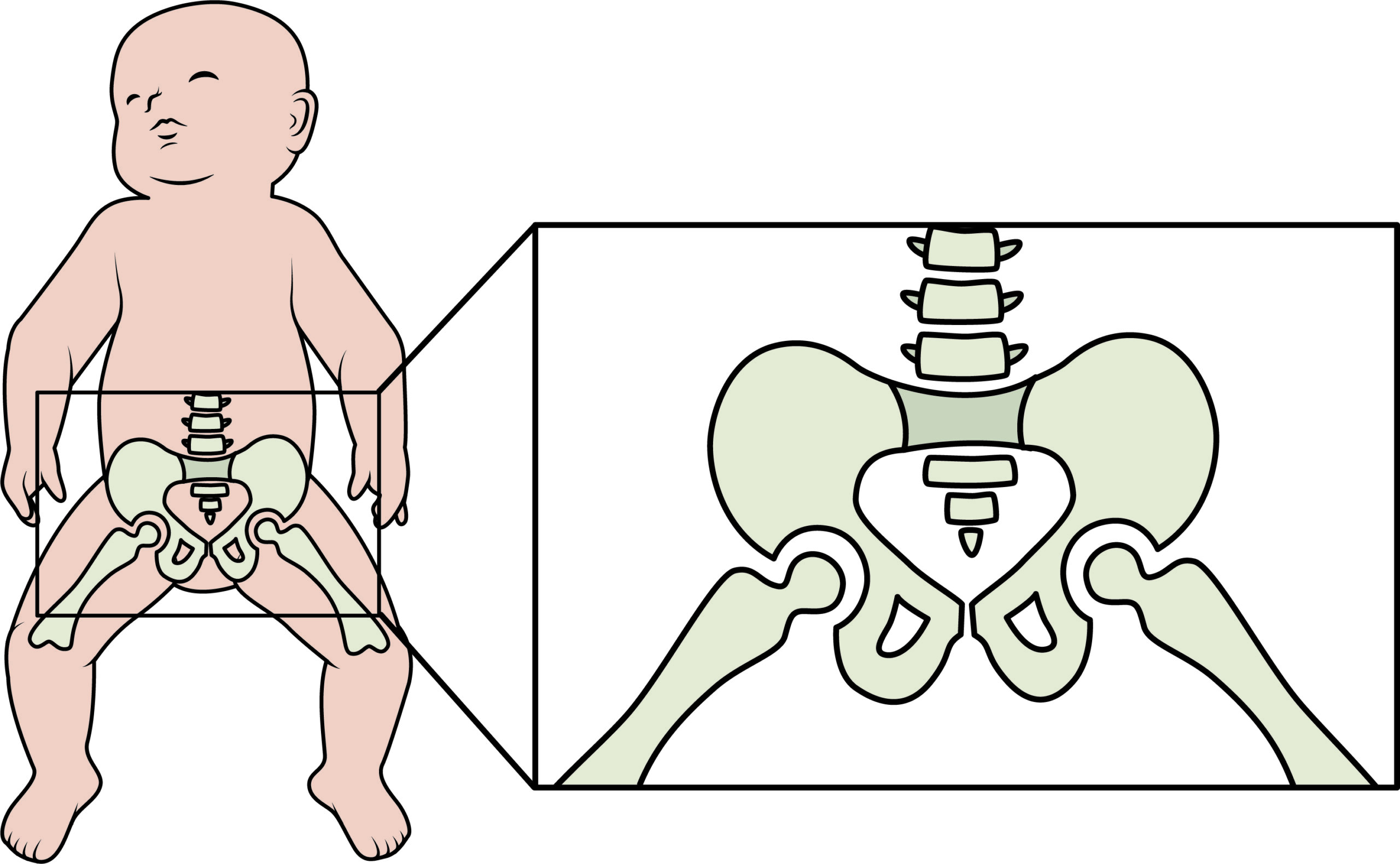
The hip is a ball-and-socket joint where the rounded head of the femur (thighbone) fits snugly into the acetabulum, a cup-shaped socket in the pelvis. Surrounding the acetabulum is a strong ring of fibrocartilage called the labrum, which forms a tight seal and enhances joint stability.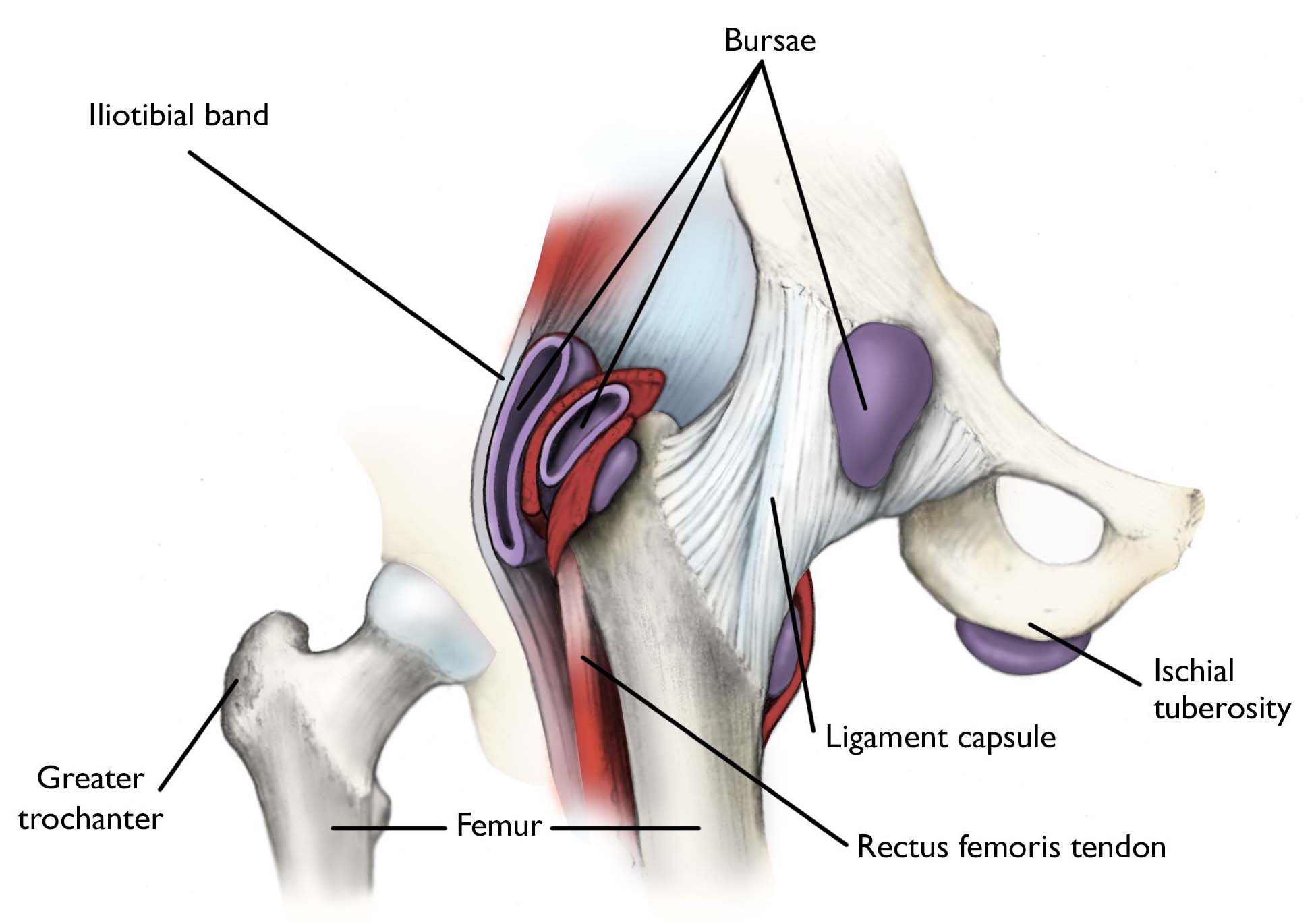 Illustration shows the bones of the hip joint, as well as the ligaments, tendons, and bursae that surround and protect the joint.
Description
Snapping hip syndrome occurs when tendons and muscles slide over bony structures in various regions of the hip, creating the characteristic snapping sensation.- Outer Side of the Hip The most common area for snapping hip is on the outer side of the hip, where the iliotibial (IT) band passes over the greater trochanter, a prominent part of the thighbone. When the hip is straight, the IT band lies behind the trochanter, and as the hip bends, the band shifts over it to the front. This back-and-forth movement, combined with the constant tension in the IT band, produces the snapping sound. Over time, repetitive snapping can lead to hip bursitis, a condition involving inflammation and thickening of the bursa, a fluid-filled sac that cushions the movement of muscles over bones.
- Front of the Hip A snapping sensation in the front of the hip often involves the rectus femoris tendon, which extends from the front of the thigh to the pelvis. As the hip bends, this tendon shifts across the head of the thighbone, and when the hip straightens, it moves back to the side, causing the snapping. Similarly, the iliopsoas tendon can catch on bony prominences at the front of the pelvic bone, contributing to the sensation.
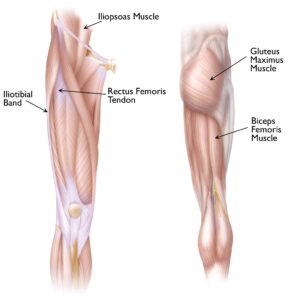 (Left) This front-view of the hip and thigh shows musculature most often associated with snapping hip: the iliotibial band, rectus femoris tendon, and iliopsoas muscle. (Right) The biceps femoris hamstring muscle travels under the gluteus maximus and can snap as it moves over the ischial tuberosity.
- Back of the Hip Snapping at the back of the hip may occur when the hamstring tendon moves over the ischial tuberosity, the sitting bone. This type of snapping is less common and is usually felt as a catching sensation in the buttock area.
- Cartilage Issues Damage to the cartilage in the hip joint, particularly a tear in the labrum lining the socket, can also cause a snapping sensation. Loose cartilage fragments may float within the joint, leading to catching or locking of the hip. Unlike snapping caused by tendons, labral tears are more likely to produce deep groin pain and may result in additional symptoms such as joint instability.
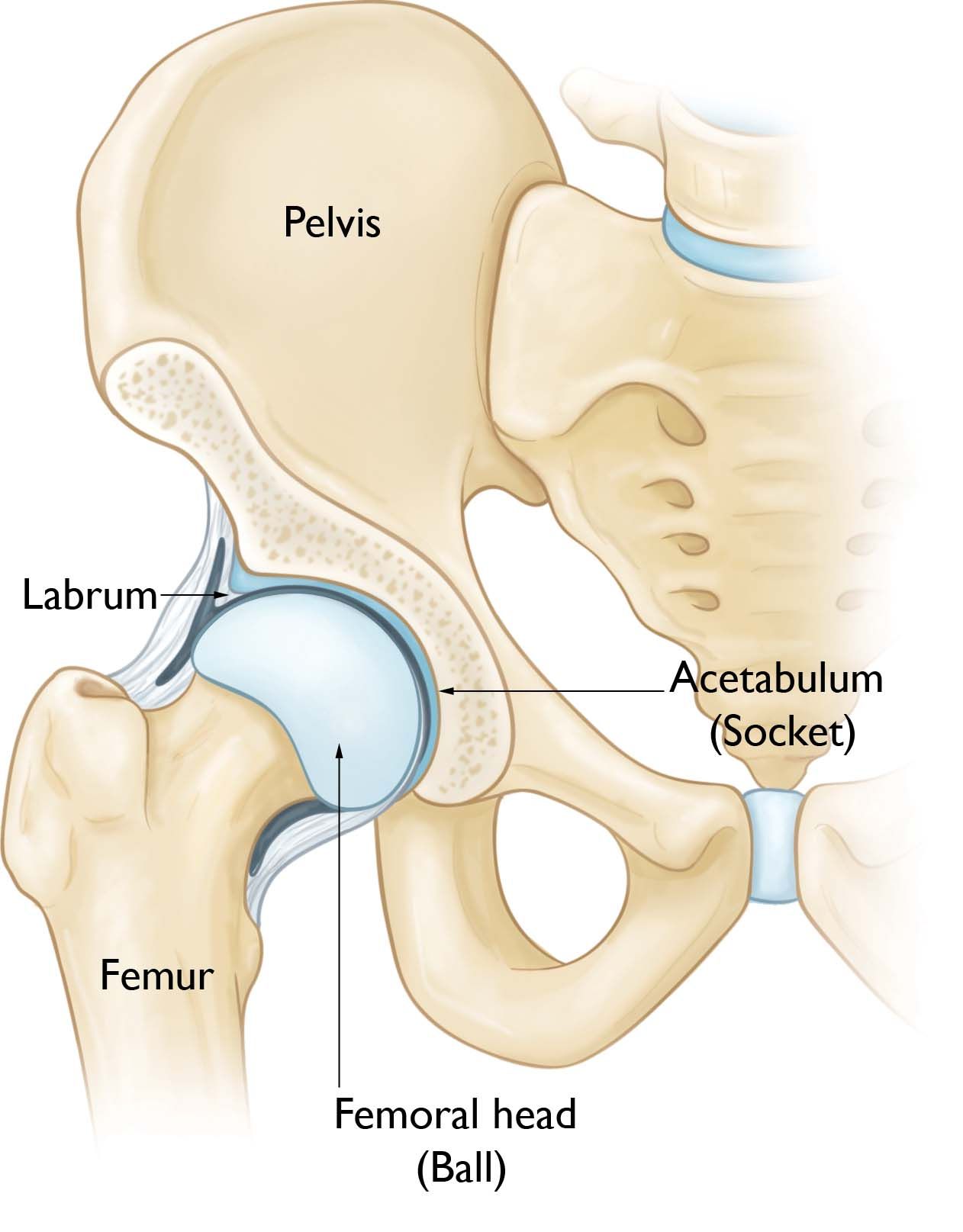
Mechanical symptoms, such as catching in the hip, can also be caused by tears in the labrum or damage to the cartilage that covers the bones of the joint.
Cause
Snapping hip is commonly caused by tight muscles and tendons surrounding the hip joint. Individuals participating in activities or sports that involve repetitive hip bending, such as running or cycling, are at a higher risk. Dancers are particularly susceptible due to the extensive range of motion and repetitive movements required in their routines. Adolescents, especially young athletes, are also prone to snapping hip. During growth spurts, the rapid changes in body structure often result in tightness in the hip muscles and tendons, making this age group more vulnerable to the condition.Home Remedies
Most people with snapping hip do not seek medical attention unless the condition causes significant pain. If you experience discomfort or annoyance from snapping hip but do not feel the need to see a doctor, the following home remedies may help:- Rest and Ice: Limit activities that aggravate the snapping sensation and apply ice packs to the affected area to reduce inflammation.
- Over-the-Counter Pain Relief: Use nonsteroidal anti-inflammatory drugs (NSAIDs) like ibuprofen or aspirin to alleviate pain and inflammation.
- Modify Activities: Adjust your exercise or sport routines to minimize repetitive hip movements. For instance, reduce cycling time or opt for swimming while primarily using your arms.
Doctor Examination
Medical History and Physical Examination
To determine the underlying cause of snapping hip, your doctor will begin by reviewing your medical history and symptoms, followed by a thorough physical examination. During this process, they may ask detailed questions such as:- The location of the discomfort.
- Activities or movements that trigger the snapping sensation.
- Whether you can demonstrate the snapping motion.
- Any history of hip-related injuries or trauma.
Imaging Tests
Although snapping hip typically does not show abnormalities on X-rays, your doctor may recommend imaging tests to rule out other issues involving the bones or joint. X-rays can provide a clear view of bone structures, while additional tests like MRI or ultrasound may be used if further evaluation is necessary.Treatment
Rest and Activity Modification
The initial approach to treatment usually involves resting the affected hip and avoiding activities that aggravate the condition. Adjusting daily movements or exercises can also reduce stress on the hip joint.Physical Therapy
Your doctor may recommend physical therapy to help stretch and strengthen the muscles and tendons around the hip. This approach can improve flexibility and reduce the snapping sensation. A physical therapist may guide you through targeted exercises, such as the following:Iliotibial Band Stretch
- Stand next to a wall for support.
- Cross the leg closest to the wall behind your opposite leg.
- Gently lean your hip toward the wall until you feel a stretch along the outer side of your hip. Hold this position for 30 seconds.
- Switch sides and repeat the stretch on the opposite leg.
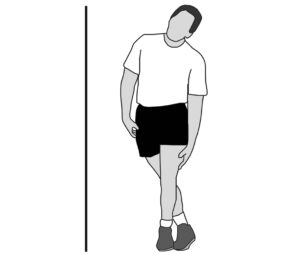 Iliotibial band stretch
Piriformis Stretch
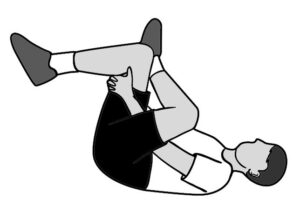
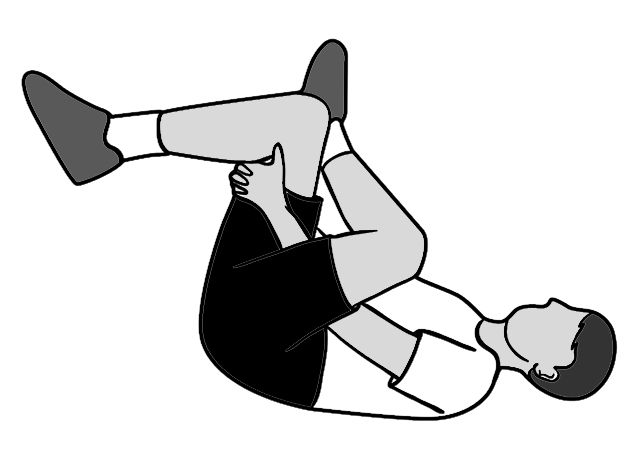
This stretch is designed to alleviate tension in the hip and buttocks, particularly targeting the piriformis muscle. Follow these steps to perform the exercise:- Lie flat on your back with your knees bent and feet resting on the floor.
- Cross the foot of the affected leg over the opposite knee, creating a "figure-four" shape.
- Reach behind the thigh of the unaffected leg and clasp your hands together.
- Gently pull your thigh toward your chest until you feel a stretch in the hip and buttocks of the affected side. Hold this position for 30 seconds.
- Switch to the other side and repeat the stretch.